Regain the Look of a Breast Mound with a Single-Stage Procedure in the Vancouver Area
Most breast reconstruction procedures involving implants require patience, as a “pocket” to hold the implant must be made over time in the tissue. Some patients, however, can benefit from an approach that yields visible results much sooner. With direct-to-implant reconstruction, the Richmond-based Dr. Robyn Watts can work on restoring chest contours with implants at the same time as the mastectomy that takes breast volume away.
In order to ensure that patients seeking reconstructive surgery get the procedure that works best for their unique anatomy and situation, Dr. Watts will first conduct a thorough consultation. From there, she will determine whether direct-to-implant reconstruction or another approach would be ideal.
Get in Touch!
Find out how direct-to-implant reconstruction with Richmond and Vancouver’s Dr. Robyn Watts can help you achieve a restored look. Call 604-674-1997 or fill out our online contact form to schedule a consultation. Note that a referral from a general practitioner or general surgeon is required for this procedure.
Amanda Clune
I cannot say enough about my experience with Dr. Robyn Watts and her team. From my very first consultation to the final follow-ups, I felt completely supported and cared for every step of the way. I had both a breast augmentation and abdominoplasty, and the results have exceeded my expectations in every way. Dr. Watts is not only incredibly skilled, but also kind, patient, and attentive—she truly takes the time to listen and ensure you feel comfortable with every decision.
Annastasija
Dr. Watts and her team are incredible! The care that I received throughout the process was beyond my expectations. Everyone in this office takes great pride in their work to ensure their clients receive the best care possible and leave feeling more confident in their skin. Thank you to Brie, Nicole, and Dr. Watts for giving me that little extra confidence I needed!
Jennifer Snow
I can't recommend Dr. Watts highly enough. She is personable, and a skilled surgeon. My results exceeded my expectations. The office staff, nurse and Dr. Watts were accessible through every moment of my recovery and I am thrilled with my results.
What Is Direct-to-Implant Reconstruction?
As the surgery’s name (direct-to-implant reconstruction) implies, mastectomy patients undergoing this surgical strategy go directly from having breast tissue removed to having implants put into place to re-create their desired chest contours.
An implant, either saline or silicone, is inserted beneath or above the pectoralis muscle, depending on the patient’s anatomy. It is then held in place with a sheet of “acellular dermis,” which covers the lower portion of the implant and serves as something like a sling or pocket.

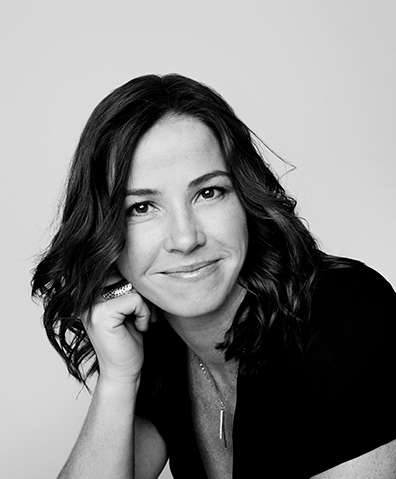
Dr. Robyn Watts
Plastic and Reconstructive Surgeon
Dr. Robyn Watts is a board-certified plastic surgeon specializing in breast reconstruction, cosmetic breast surgery, and body contouring. Trained in Canada and the U.S., she leads plastic surgery at Richmond Hospital, practices at Cambie Surgical Centre, teaches at UBC, and is known for meticulous technique, compassion, and natural results.
When Is Direct-to-Implant Reconstruction Recommended?
Dr. Watts may recommend this surgery for patients who have small to medium-sized breasts and minimal to no drooping. In addition, ideal candidates are those whose breast cancer treatment plan includes no radiation therapy—either before or after the reconstruction.
What Happens During a Direct-to-Implant Reconstruction?
Dr. Watts performs her surgeries at Richmond Hospital, where patients will be put under general anesthesia. Since the direct-to-implant reconstruction follows the mastectomy surgery, there is only need for one session to accomplish both aspects of the procedure~~, however, a second stage of fat grafting is often required. Many patients will undergo a second stage of fat grafting as part of the overall reconstructive plan.
Once the necessary tissue is removed, Dr. Watts will then insert the implant and acellular matrix, working to keep any necessary incisions as inconspicuous as possible. These incisions are sutured with care.
The direct-to-implant process can take 60 to 90 minutes following the mastectomy (for a total surgery time of three to four hours), with the specifics determined by multiple factors—including whether the procedure is focusing on just one breast (unilateral) or both (bilateral).

How Long Does Recovery from Direct-to-Implant Reconstruction Take?
Patients can go home within 24 hours, with no extended hospital stay required. A return to work can happen at around two to four weeks after the procedure, though more vigorous activities should be avoided for about six weeks.
Note that direct-to-implant reconstruction patients often do require a follow-up fat grafting procedure, which is considered a secondary revision. The added fat provides a little actual volume but works mostly to cover the implants so that the skin above stays smooth, and the results appear especially natural.
What Alternatives Exist for Direct-to-Implant Reconstruction?
Most commonly, reconstruction patients receiving implants undergo what is known as a two-stage expander-implant reconstruction. This is when there is one surgery to insert the expander, multiple visits to expand the tissue, and then a surgery to insert the implant. This is considered in patients with larger breasts, thinner mastectomy flaps, larger and less-contained cancers, and those who require radiation.
Some patients benefit best from a flap-based reconstruction, which involves creating a breast mound out of tissue moved from elsewhere on the body. Options include the latissimus dorsi flap, which moves tissue from the back, or the TRAM flap, which moves tissue from the lower stomach.
Note that a referral from a general practitioner or general surgeon is required for this procedure. Get more information about direct to implant reconstruction surgery with Richmond’s Dr. Robyn Watts. Patients throughout the Vancouver area and beyond can call us at 604-674-1997 or fill out our online contact form.
Before & After Photo Gallery
See Amazing Transformations!
See real patient transformations that highlight the artistry and precision behind Dr. Watts’ surgical approach. Each before-and-after showcases natural, balanced results tailored to individual goals.
- Results vary by individual, and no outcome is guaranteed.

Patient Financing
YOUR RESULTS. OUR TERMS.
We’ve partnered with Beautifi to provide you with flexible monthly payment plans.